Design

Case Studies • Systems • UX • Production

USC • M.S. Computer Science: Game Development

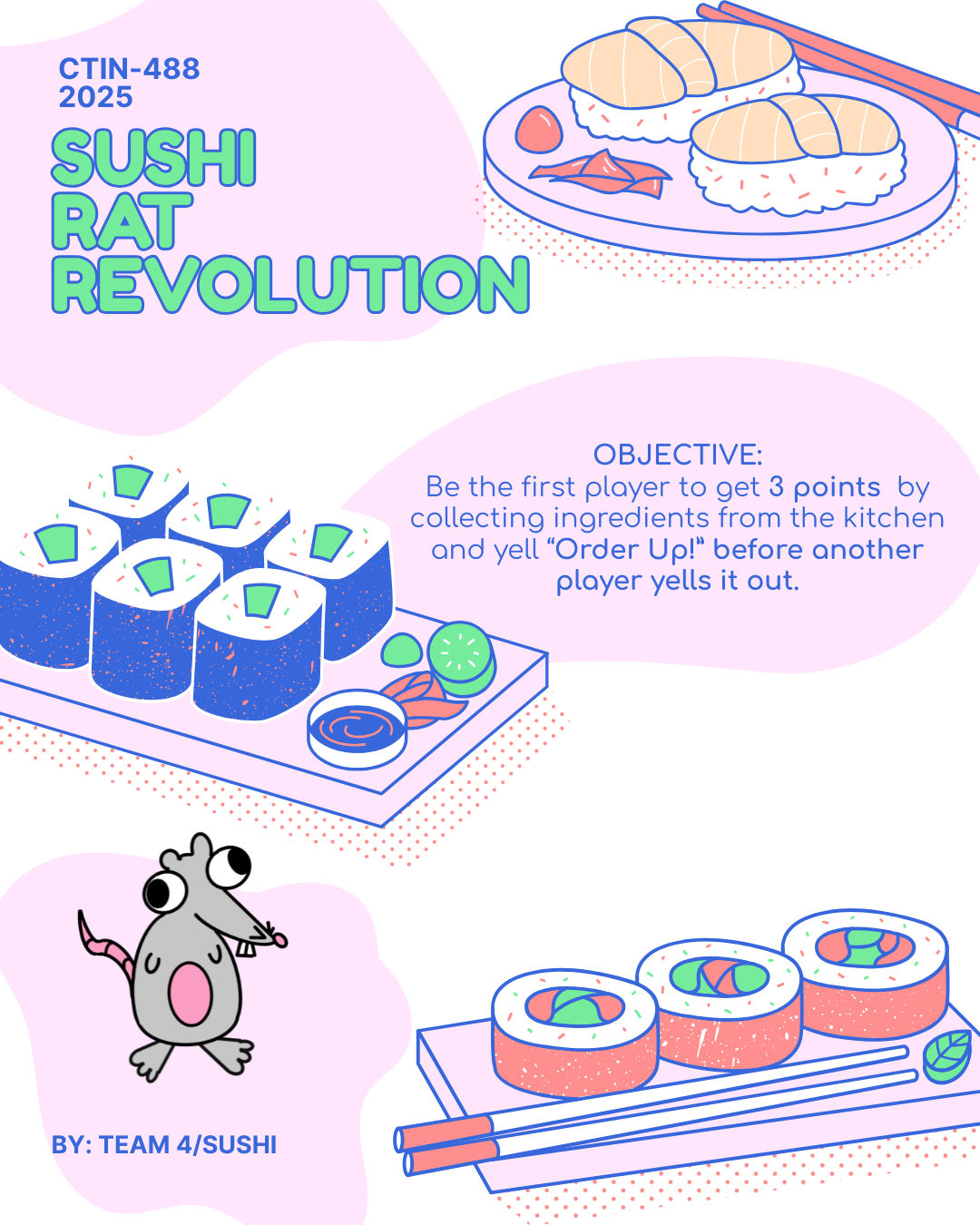
Board Game — Sushi Rat Revolution (Up the River mod)
Sushi Rat Revolution cover art

How I modded Up the River to add a rotating conveyor and new tension loops?

Overview — Modding Up the River

Sushi Rat Revolution began as a targeted mod of Up the River built under a structured two-week work cycle. Across Week 1 and Week 2, our team introduced a rotating conveyor mechanic, redefined how rats interact with the river, and layered in set-collection goals to reshape push-your-luck decisions. The short timeline forced us to treat each week as its own micro-sprint: Week 1 focused on proving the core mechanic, and Week 2 focused on smoothing pacing and clarifying player choices. My role centered on translating the mod’s design goals into clear, production-friendly rule updates and tuning the conveyor until it consistently behaved as the game’s main tension engine.

  • Week 1 : Defined the conveyor, paper-prototyped new states, clarified rat movement, and identified broken loops.
  • Week 2 : Smoothed pacing, tightened rules text, aligned iconography with player cues, and recalibrated set-collection rewards.
  • Kept all changes compatible with the original components so the mod could function as a “drop-in” rules patch.
  • Documented the final rule diffs so a producer, QA team, or instructor can quickly understand what changed and why.

Mod Design & Process

We approached the project like a small production team: identify a friction point → propose a minimal rule change → prototype → playtest → iterate. Because the class schedule locked us to a two-week cycle, every change had to either sharpen tension, clarify feedback, or improve player flow. Anything that created complexity without new drama was cut.

  • Reframed the conveyor as the core “risk engine” that determines urgency each turn.
  • Balanced set-collection so rewards build over time but don’t stall the race pacing.
  • Resolved early flow issues where players hesitated or stalled by simplifying turn structure and reducing ambiguous edge cases.
  • Designed icons and card layouts to be easily reskinned in a future art or digital pass.
  • Tracked changes between Week 1 and Week 2 in the design journals so instructors and future teammates can see the iteration trail.

Production Notes

  • Rule changes are isolated so the base Up the River experience stays intact for players who prefer the original.
  • Card and icon assets are built as modular layers for fast updates or regional/localized variants.
  • Playtest report and journals are structured to support QA, usability review, and future digital prototyping.
UCSC • B.S. Computer Science: Game Design

Wireframes — UI & UX

How I reimagined a Mario Kart mod to introduce Stardew-style farming?

Mod UX Vision — Mario Kart meets Stardew Valley

This project explores how a live-action racing game could adopt cozy, persistent systems from farming/sim games. I prototyped mod flows for: in-race pop-up festivals, player-run farm kiosks that affect race buffs, and a safe mod marketplace UI that signals provenance, compatibility, and update history.

Design Highlights

  • Mod discovery UI with clear trust signals (ratings, signed authors, changelogs).
  • Farming tools and vendor flows that surface rewards without interrupting race pacing.
  • Onboarding for creators: templates, previewable changes, and rollback support.
The Right to Carry — Merrill Moat Mural
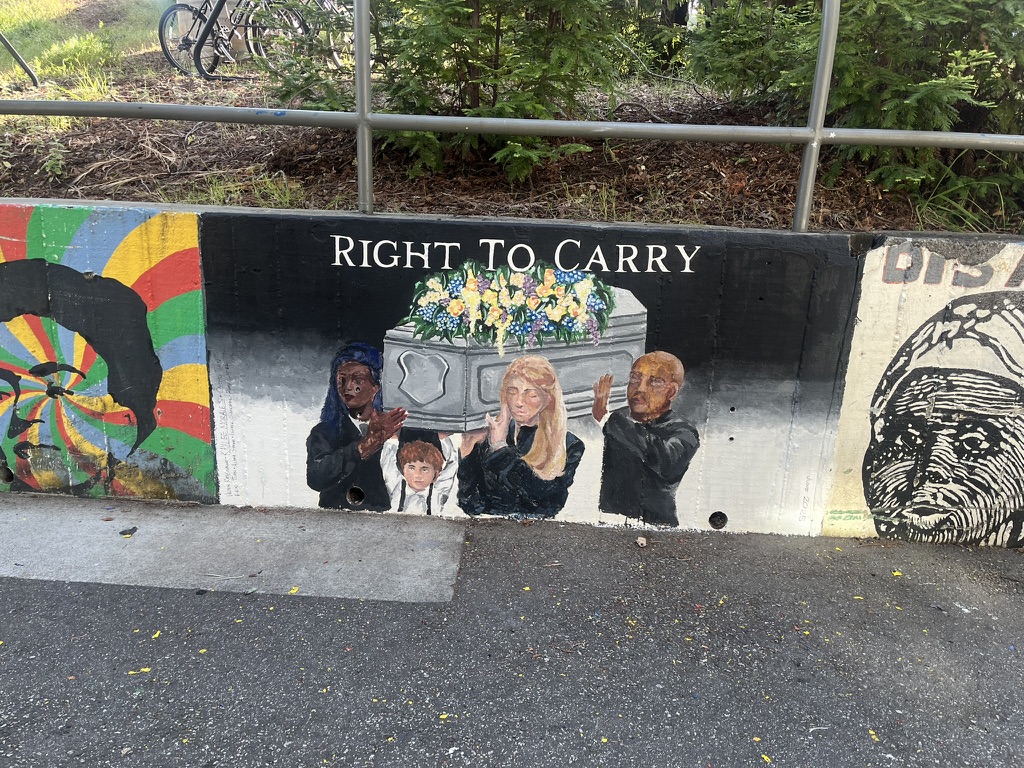
The Right to Carry mural

How I used public art to open a campus-wide conversation about gun violence?

The Right to Carry mural full view
Merrill Moat — 2024

Artist Statement — Art as Conversation

“The Right to Carry,” is a mural that ventures beyond mere artistic expression to serve as a poignant commentary on the escalating crisis of gun violence in America. As a survivor of a school shooting, my journey through college has been significantly shaped by my personal quest for healing. This artwork emerges from that transformative experience, aiming to advocate for critical changes in gun legislation.

Set against the backdrop of a funeral procession, the mural captures a moment frozen in time—a somber scene that brings together individuals from diverse backgrounds, each affected by gun violence. At the forefront of the composition, the figures of a woman and a Black man are intentionally blurred. This artistic choice seeks to depersonalize the pain, suggesting that the grief and demand for change are universal, shared by many rather than isolated to individuals. These figures stand not just as mourners, but as symbols of the broader call for action—voices from communities that have endured too many losses.

Central to the scene is a casket, a stark emblem of the ultimate price paid by countless lives. It is not merely a representation of death, but a profound reminder of the irreversible losses that communities suffer due to legislative inaction. The casket's prominent placement in the mural is designed to confront viewers with the tangible consequences of gun violence, compelling a visceral response and fostering a reflective mindset.

Encircling the casket, vibrant flowers burst through the otherwise muted palette of the procession. These flowers—intensely colored and alive—contrast sharply with the greys and blacks that dominate the scene, symbolizing bursts of hope amidst overwhelming grief. They represent not only the memory of those lost, but also the potential for rebirth and positive change that could stem from reformed gun laws. This floral motif reinforces the mural’s message of resilience, suggesting that from the depths of despair can spring forth new growth and legislative progress.

The funeral procession depicted in the mural does more than mourn the deceased; it unites those left behind in a shared vision of a safer future. This collective aspect of the mural reflects Merrill College Community’s commitment to inclusivity and mutual understanding. It calls on viewers to recognize their part in a larger community, one that crosses cultural and social boundaries in the face of shared tragedies.

By presenting "The Right to Carry," I intend to channel personal trauma into a catalyst for social advocacy, transforming a narrative of individual suffering into a powerful collective demand for change. The mural invites viewers to engage with the harsh realities of gun violence and consider their role in advocating for and implementing legislative reforms. It is designed not just to move the audience emotionally but to motivate them to action, serving as a reminder that art can be a formidable force in societal transformation.

In summary, this mural is not merely a piece of art; it is a declaration of resilience, a communal expression of loss, and a hopeful plea for compassion and legislative change. Through the vivid imagery of the funeral and the symbolic use of color, "The Right to Carry" seeks to inspire reflection, provoke dialogue, and ignite a quest for a future where such tragedies are no longer a common reality.